Lately, I’ve been spending more time experimenting with “vibe coding” — that new, almost conversational way of building software with the help of AI. And while working on a project this week, something unexpected hit me:
It felt exactly like watching Geordi La Forge interact with the Enterprise’s computer in Star Trek: The Next Generation.
As a kid, I was fascinated by those scenes. Geordi would stand on the bridge or in Engineering, talking naturally to the computer:
“Computer, analyze this.”
“Computer, run a level-three diagnostic.”
“Computer, show me alternatives.”
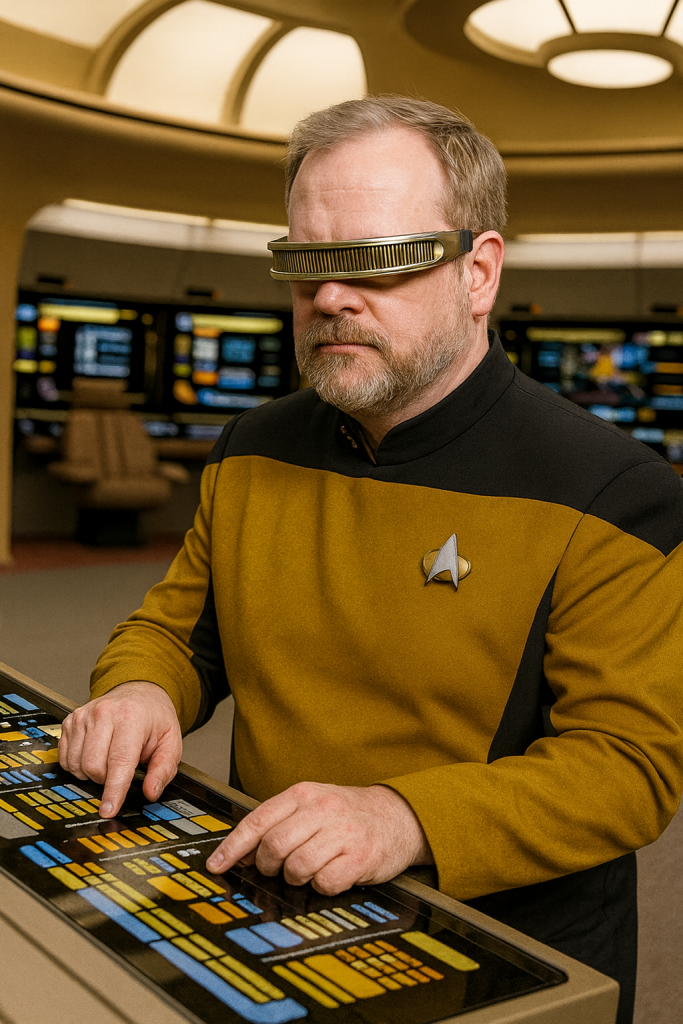
The responses were immediate, precise, and supportive — not replacing his expertise, but elevating it. It always felt like a true collaboration between human creativity and machine logic. At the time, it seemed like pure science fiction.
Now, decades later, I’m sitting at my desk, prompting an AI assistant for code scaffolding, architectural suggestions, refactoring ideas, or quick validation of thoughts — and the back-and-forth feels… familiar. Not because the tools are perfect, but because the interaction pattern has shifted. It’s no longer about typing commands into a silent machine. It’s about working with a system that participates in the creative and technical process.
That realization was surprisingly emotional for me.
It made me aware of how much of my curiosity for technology was shaped by those early sci-fi visions — and how parts of that imagined future are slowly becoming everyday reality.
I’m not saying we’re on the Enterprise (yet 😉), but the way we collaborate with computers is evolving faster than expected. And for those of us who grew up dreaming about this kind of human-machine partnership, it’s an exciting reminder:
We’re already living in the future we once imagined.